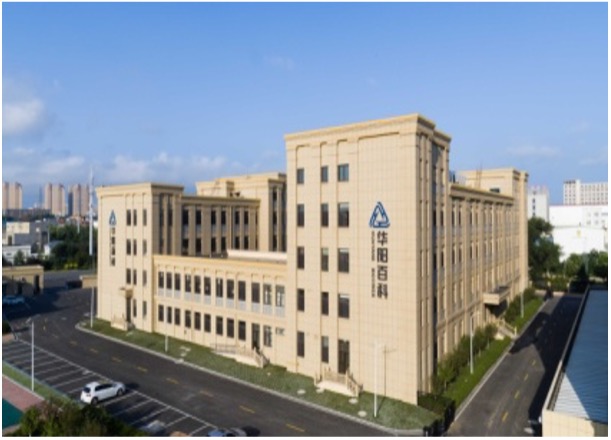

Office building
HuaYang Technology Building
21bayi Road,Dalian City,Liaoning Province,China
August,2012-July,2014

WUHAN ENTREPRENEURSHIP CENTER
NO.1 Wuhan Development Road,Wuhan,Hubei Province,China
March,2016-December,2019

Modern Life Building
No.38,Ikoyi Road,Lekki,Lagos,Nigeria
January,2016-March,2022

LEEKI CBD
No.68,Evengreen Road,Lekki,Lagos,Nigeria
July,2015-September,2018

CNY Business Center
NO.25,GRA Road Ikeja,Lagos,Nigeria
January,2019-October,2023


National Assembly office
Niamey
March,2022-April,2023

Lifemate Business Center
NO.2 Alausa Road,Abuja,Nigeria
February,2014-March,2018
Factory


Lifemate Industry Park
Ogun state,Nigeria
2017-2022.
Residency
Villa


Abuja ,Nigeria ,2019.
Hospital

The Third Comprehensive Project of The Specialized Hospital of Tongji Medical College
NO.7 Wuhan Fazhan Road,Wuhan,China
January,2013-March,2016

Peking University Cancer Hospital Phase III Project
October,2017- September,2022
Modern Road

Badagry express way
Lagos,Nigeria
July,2020 – March,2022

Concrete Road-G4 Express Way
Hunan Province,China
2012

Alsphalt Road
S23 Guangdong Province,China
March,2016
Red earth road


Red Earth Road
Ougn State,Nigeria
March,2014

Red Earth Road
Village Road,Kano state,Nigeria
May,2017,
Bridge


Hubei Yanjiang Expressway K03+200
May,2018

Roads in Northern Coted 'Ivoire PK6+603
July ,2022
Water supply


HUZHOU local water supply system
China
July 2013—September,2016
Modern agriculture


Agricultural demonstration foundation
Changsha,China
2018
PV power project

This project achieved full grid connection and power generation on June 23, 2025. This milestone for Chinese companies in Australia's new energy sector marks a breakthrough in the deep integration of Chinese clean energy technology with overseas markets.
The project is a key response to the retirement of Australia's Liddell and Eraring coal-fired power stations. Its annual power generation is equivalent to replacing 164,000 tons of standard coal, alleviating approximately 3% of New South Wales' electricity demand and providing stable support for the local energy transition.
The project innovatively utilizes a single-axis tracking system, which maximizes solar energy capture by adjusting the angle of the photovoltaic panels in real time, increasing power generation efficiency by approximately 20% compared to fixed-mount systems. Double-glass bifacial modules utilize both direct sunlight and ground-reflected light, further increasing power generation.
The use of string inverters enhances system reliability and operational flexibility.
This large-scale application of "Made in China" technology not only reduces costs but also passes Australia's stringent certification standards, validating the international competitiveness of Chinese photovoltaic technology.


The 13MW photovoltaic power station in the Meihe Wetland utilizes monocrystalline silicon N-type double-glass photovoltaic modules for bifacial power generation, improving efficiency and extending the life of the equipment. Intelligent operation and maintenance technology also automatically responds to power plant failures to prevent impacts on the upstream power grid. Upon completion, the station will generate an average annual power of 9.84 million kWh, meeting the year-round clean electricity needs of nearly 10,000 households. It will save 2,001 tons of standard coal and reduce carbon dioxide emissions by 8,009 tons annually, equivalent to planting 43,600 mature trees. The "sunshine benefit" creates an ecological barrier, with photovoltaics and wetlands coexisting, and flexible supports safeguarding ecological balance.


The Ningxia 200MW Photovoltaic Power Generation Project is a photovoltaic power generation facility located in Lingwu City, Ningxia Hui Autonomous Region, covering an area of approximately 4,500 mu (approximately 16,000 acres). The project is expected to achieve full grid connection on June 30, 2024. Upon completion, it will deliver approximately 315 million kilowatt-hours of electricity to the grid annually, saving 115,000 tons of standard coal. This will significantly alleviate local environmental pollution and improve the ecological environment. It will also reduce carbon dioxide emissions by 6.12 million tons, lower electricity costs for targeted specialty industries by 0.01-0.02 yuan per kilowatt-hour, and increase the proportion of green electricity consumption by 10 percentage points.

The first multi-scenario hybrid distributed photovoltaic demonstration project in Yibin, Sichuan Province, has been completed. Located in Pingshan County, the project covers an area of 433 mu (approximately 1.5 acres) and consists of four 5-MW sub-projects with a total installed capacity of 20 MW.
The project encompasses three major areas. The ground-based area utilizes a "fixed support + flexible support + tracking support + photovoltaic corridor" model, deploying three 5-MW-peak agricultural photovoltaic complementary power generation units. The project was connected to the grid in October. The surface area utilizes a "floating + fixed support" model, deploying two 5-MW-peak fishery photovoltaic complementary power generation units. The project was connected to the grid in early December and is currently undergoing equipment commissioning. The leisure area features three major facilities: a viewing platform, a photovoltaic corridor, and a leisure and entertainment area. Upon completion, the project will enable the simultaneous development of public power generation, tea cultivation, medicinal herb cultivation, and fish farming.


This project has a total installed capacity of 25 MW and is being implemented in two phases. The first phase, with an investment of US$19 million, will significantly improve the mining area's power supply and effectively ensure smooth production. The project will utilize cutting-edge photovoltaic technology to maximize photovoltaic power generation capacity. Furthermore, innovative trials in energy storage equipment have effectively increased the battery's storage capacity. This project has also significantly promoted the application of Chinese photovoltaic technology in Africa and increased its market share, providing an important example of China-Africa energy cooperation.